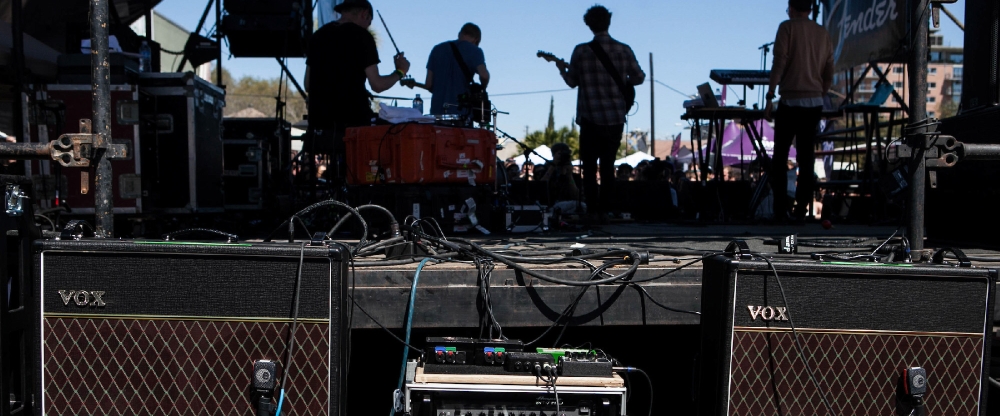
Austin calls itself the “Live Music Capital of the World.” On a busy weekend you can hear bands late into the night on Red River, Sixth Street, South Congress and on the other side of I-35 too. Everyone who keeps that scene going relies on their hearing, from the bands and sound crews to the regulars at the front. As enjoyable as concert going can be, it may come at a cost. Hearing damaged by noise, like amplified music at a show, doesn’t grow back. So, it’s worth knowing what a night out actually asks of your ears, and how to keep going to shows for decades.
How loud is a concert?
A packed club, or a spot near the front at a festival, typically runs between 100 and 110 decibels (dB). Normal conversation sits around 60 dB. Decibels work on a logarithmic scale, so every 10 dB step sounds roughly twice as loud and carries ten times the energy. A 100 dB show isn’t a little louder than talking. It’s about 10,000 times the sound energy. (Here’s how decibels and dB(A) work, in plain English.)
How long is safe?
The U.S. National Institute for Occupational Safety and Health (NIOSH) recommends a limit of 85 dBA averaged over eight hours. Every 3 dB above that halves the safe time:
- 85 dB: 8 hours
- 91 dB: 2 hours
- 97 dB: 30 minutes
- 100 dB: 15 minutes
- 106 dB: under 4 minutes
So a three-hour night at 100 dB uses about twelve times a full day’s safe dose.
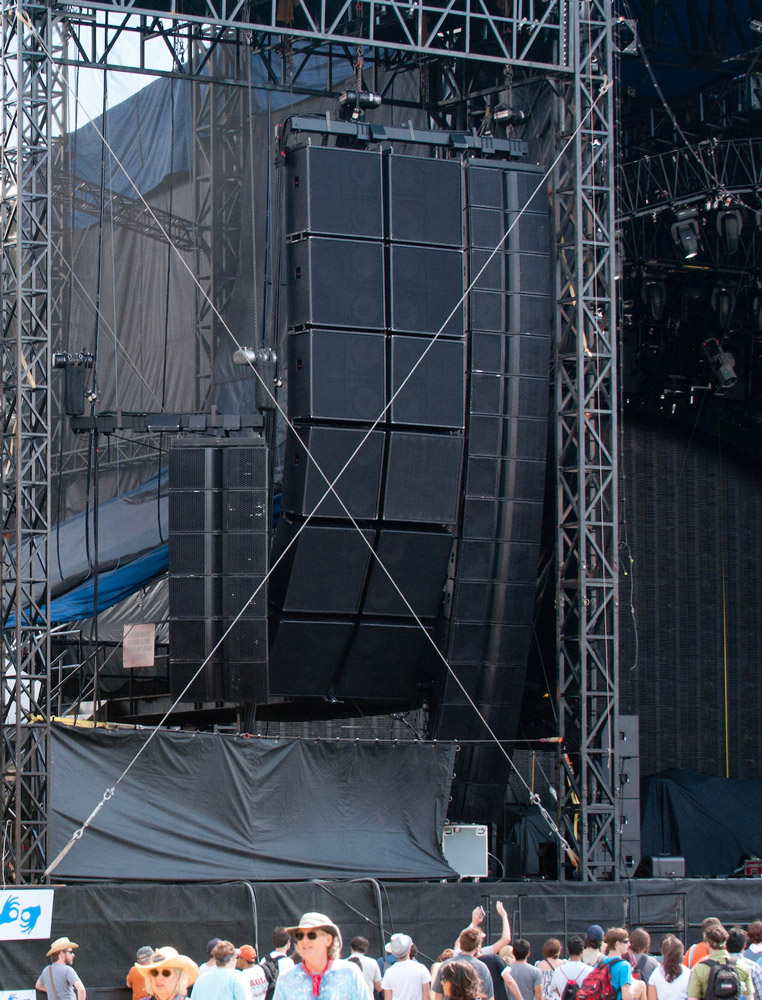
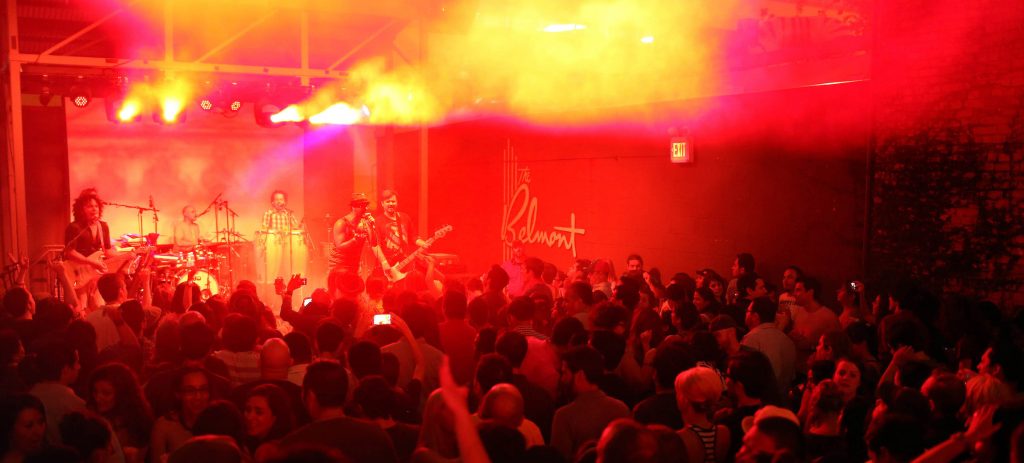
Photo: Austin City Limits Music Festival
Sunday, October 10, 2010
Courtesy Paul Woodruff
What a week of shows adds up to
Ringing or muffled hearing after a show is a sign your ears were overloaded. It usually fades by morning, but each overload adds up, and that’s how noise-induced hearing loss builds–slowly, and permanently. Research also suggests loud noise can damage the connections between the inner ear and the hearing nerve even when a standard hearing test still looks normal, which can show up years later as trouble following a conversation in a noisy bar. Tinnitus, a ringing or buzzing that doesn’t go away, is the other common result.
Three nights a week at those levels, three hours a night, without protection, works out to about 36 days’ worth of safe exposure every week.
Small changes that make a big difference
- Wear earplugs. Musician’s or high-fidelity earplugs cut the level by roughly 15 to 25 dB, fairly evenly across frequencies, so the music still sounds like music. At a 100 dB show, 20 dB plugs bring you down to about 80 dB, and three hours there uses around 12 percent of your daily dose instead of 1,200 percent.
- Step back from the speakers. Outdoors, the level falls by about 6 dB each time you double your distance from the source, and every 6 dB you drop gives you four times the safe listening time. Indoors the room holds on to more of the sound, but moving away from the PA still helps. This free SPL distance calculator shows how fast the level drops.
- Take breaks. Stepping outside for a few minutes between sets gives your ears a rest.
- Count your week, not just your night. If you’ve already been to a loud show this week, protection at the next one matters even more.
- Musicians, the stage counts too. Keep monitor and in-ear levels as low as you can while still playing well. Rehearsal rooms are small and can get as loud as the gig, so wear plugs there as well.
Help for Austin musicians
Austin musicians also have a local resource worth knowing about. The Health Alliance for Austin Musicians (HAAM) runs hearing clinics for its members about four times a year, with a hearing screening and impressions for custom filtered musician earplugs for a $25 co-pay.
Venues are moving in the same direction. The World Health Organization’s Global Standard for Safe Listening Venues and Events recommends keeping average levels at or below 100 dB over any 15 minutes, monitoring sound levels live, offering hearing protection and providing quiet zones where people can give their ears a break.
Check your own week
The free safe listening calculator from The Audio Stuff shows how long each sound level is safe and adds up your listening across the day, for shows and headphones alike. It runs in your browser, with no account needed.
Jakub Charkiewicz is a guest author for this post. He is the founder of The Audio Stuff, an independent audio review site based in Warsaw, Poland, that also builds free tools for safe listening and better sound.