Written by Jason Mellard with the Center for Texas Music History at Texas State University
This Week in Texas Music History, a UT student witnesses a jazz concert that alters the course of history.
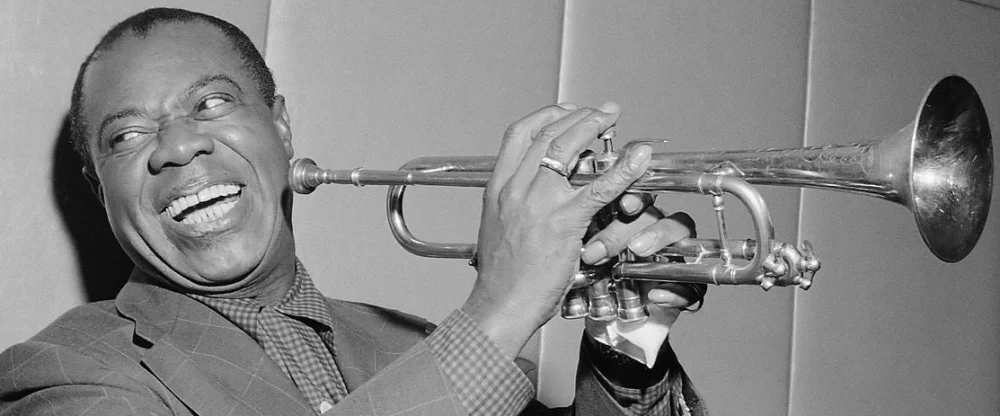
On October 12, 1931, Louis Armstrong performed a concert at Austin’s Driskill Hotel that sent ripples through civil rights history decades later. Armstrong was then at a critical moment in his career. He had just wrapped up his genre-defining time with the Hot Five and was entering a new era of improvisations on American standards that would make Armstrong among the most celebrated artists of the twentieth century. His key recordings of “Stardust” and “Georgia on My Mind” came just three weeks after his Austin tour date.
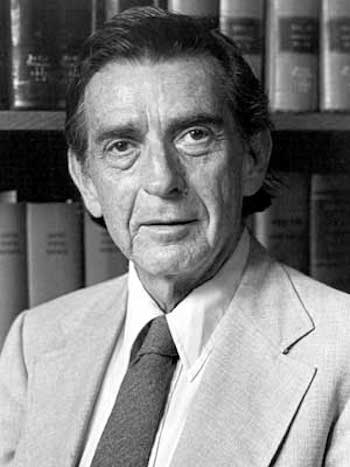
This particular concert holds additional weight because of someone who was in attendance, or at least who that someone would become in the wake of hearing Armstrong play. Charles Black, then a freshman at the University of Texas, was utterly transformed. He later said of that night that it “is impossible to overstate the significance in 1931 of a sixteen-year-old [white] Southern boy’s seeing genius, for the first time, in a black [artist].”
Charles Black later wrote those words about the concert’s role in his life after having worked with the NAACP on the victorious 1954 Brown vs. Board Supreme Court case declaring school segregation unconstitutional. At a reception at Harlem’s Savoy Ballroom in the wake of that victory, Thurgood Marshall introduced Charles Black as “a white man from Texas, who’s been with us all the way.”
Following the celebration in Harlem, Charles Black went home, put Armstrong’s “Savoy Blues” on the record player, and reflected on the concert that changed his life as well as the course of legal history.
“I have felt that it was just then [at the Driskill in 1931], that I started walking toward the Brown case, where I belonged. . . Every person in the South of those days must have had some doubts about racism. . . but Louis opened my eyes wide, and put to me a choice.”
Charles L. Black Jr.
Sources:
Charles Black, “My World with Louis Armstrong” Yale Law Review 145 (1979). https://openyls.law.yale.edu/server/api/core/bitstreams/a2ea3f80-7eff-4c81-9cdd-f4d73b79144c/content
Michael Corcoran. Austin Music Is a Scene not a Sound. Fort Worth: Texas Christian University Press, 2025.