***This Week in Texas Music History is brought to you by Brane Audio***
By Jason Mellard from the Center for Texas Music History at Texas State University.
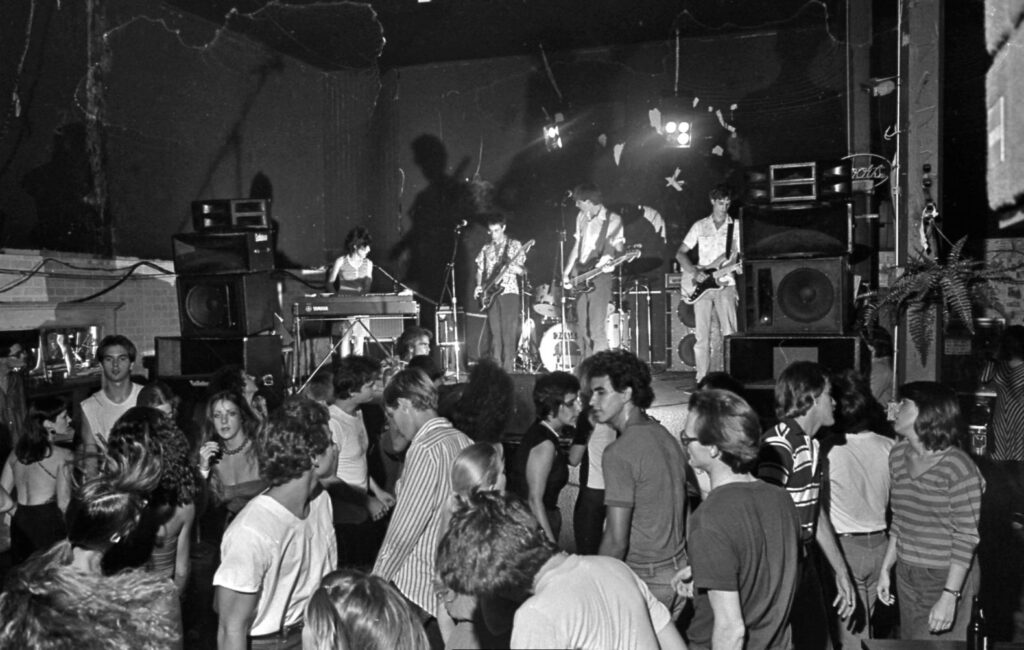
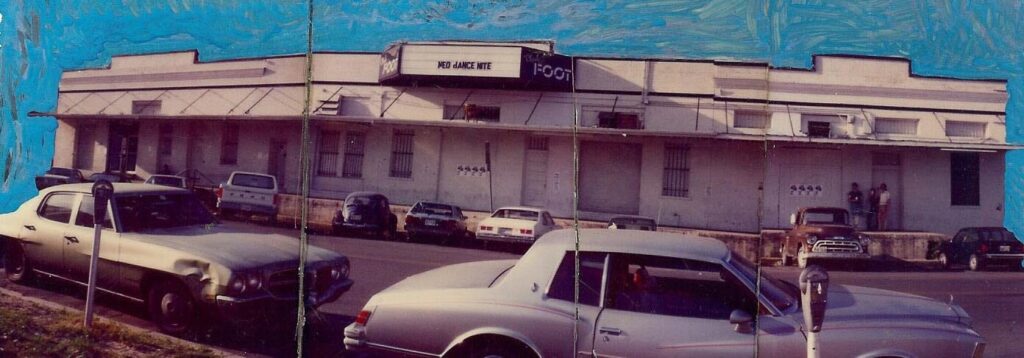
On November 4, 1980, Leeds post-punk band Gang of Four played the venue Club Foot in Austin. They were the second significant touring act at Texas’ new 80s home of punk and new wave.
A week earlier, London band the Stranglers had headlined opening night. Before this, punk and post-punk’s first big touring acts like the Ramones and Talking Heads had played Austin’s Armadillo World Headquarters, while the local scene incubated at Raul’s near the UT campus. But Club Foot may be where the scene consolidated, where local acts like Joe King Carrasco, the Skunks, and Standing Waves shared stages with 80s stars like U2, New Order, and the Go-Go’s.
The venue, next to a Greyhound bus station, had been a disco before entrepreneur John Bird and promoter Jim Ramsey set the sights on the coolest acts of the new decade.
The Gang of Four’s November 4th gig just happened to be election night. The band made a sardonic remark about America’s election of a “B-list actor” as president and then exploded into a show that photographer David Fox recalls this way: “You know that saying about how ‘rock and roll saved my life?’ That’s how that night felt.” Club Foot pushed musical boundaries. They hosted the first Central Texas appearance of a major touring artist from Africa, for example, when King Sunny Ade came to town in 1983.
Club Foot nurtured post-punk and new wave, local artists and world music pioneers, and even became a key blues site during a gap in Antone’s tenure, hosting B. B. King, James Brown, and Albert Collins. In the club’s first year, it appeared in the Meat Loaf movie Roadie as a stand-in for LA’s Whisky-a-Go-Go. In its last year, 1983, it hosted the first Austin Chronicle Music Awards with Stevie Ray Vaughan. Short-lived but influential, the club now lies somewhere beneath the Frost Bank skyscraper downtown.
Sources:
Michael Corcoran. Austin Music is a Scene Not a Sound: An Illustrated History of the First 100 Years. Fort Worth: Texas Christian University Press, 2024.