February is Black History Month and all month long we’ll be featuring black artists, events and venues that have shaped the Austin music scene.
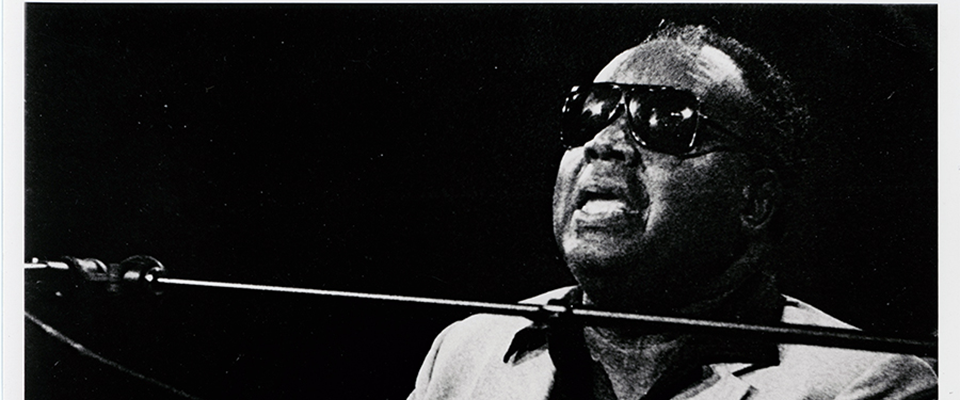
Dr. Hepcat—born Albert Lavada Durst—was an American blues pianist, singer, baseball commentator, and radio DJ. He was born January 9, 1913, in Austin, Texas, where he learned piano as a child and came up playing barrelhouse blues. He was mentored by fellow pianist Robert Shaw, whom Durst credited as his most important teacher. Early on, he performed everywhere from fish fries and rent parties to juke joints across Central Texas.
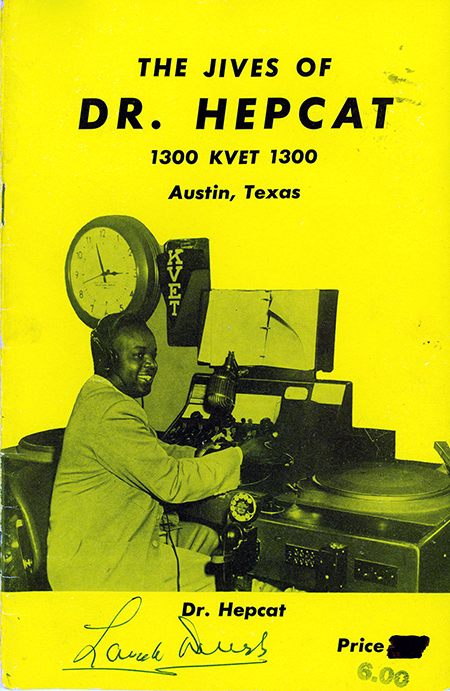
Music wasn’t his only lane. Durst was a multi-talented force. In the 1940s, he became an announcer for the Austin Black Senators, a Negro League baseball team. His work caught the attention of future Texas governor John Connally, then the manager of KVET, who hired him in 1948 as a baseball commentator and DJ—making Durst the first Black radio DJ in Texas. Broadcasting under the name Dr. Hepcat, he hosted The Rosewood Scramble, becoming known for his jive talk and his ability to bridge Black and white audiences at a time when shared listening spaces were rare. He even published The Jives of Dr. Hepcat, a book that served as both a dictionary and cultural guide to jive language.
Durst was also a major promoter, bringing nationally recognized Black performers to the historic Doris Miller Auditorium in East Austin. At the same time, he worked as director of athletics at the Rosewood Recreation Center, a role he held from the mid-1940s until his retirement. Though his career took many turns, music never left him. In 1949, Lavada Durst, recording as Dr. Hepcat, released the singles “Hattie Green” and “Hepcat’s Boogie” for Uptown Records, an Austin-based label owned by KVET program director Fred Caldwell.
In the 1950s, Durst shifted his focus to gospel music. He stepped away from secular performance, managed a group called the Charlottes, and became deeply involved in church life, eventually serving as associate pastor at Olivet Baptist Church in East Austin. During this period, he helped write the influential song “Let’s Talk About Jesus” for the Austin Singers of Bells of Joy.
In the 1970s and ’80s, Dr. Hepcat returned to music with a renewed purpose: preserving and sharing the history of Black music. He was highly selective about where he performed but appeared at major festivals including the Kerrville Folk Festival, the Chicago Blues Festival, and the San Francisco Blues Festival.
Durst was also a devoted community leader. When he retired from the Austin Parks Department in 1979, the City of Austin recognized him for his distinguished service to African American youth. In 1995, Durst was inducted into the unofficial Rock Radio Hall of Fame and was also credited as one of the inventors of rock ’n’ roll radio by Wax, sometimes referred to as Waxpaper, a promotional, in-house magazine published monthly by Warner Bros. Records.
Albert Lavada Durst died in 1995 in Austin at the age of 82. But his legacy—his music, his voice, his commitment to community, and the path he carved for Black radio broadcasters—continues to resonate.